
Ask yourself a simple question: when your ideal buyer researches a problem today, where do they start?
A growing number of them no longer start with Google. They ask ChatGPT. They ask Perplexity. And even when they do use Google, an AI Overview often answers their question before they see a single organic result.
This shift has created a new discipline called generative engine optimisation, or GEO. It is the practice of making your brand visible inside AI-generated answers, not just in traditional search rankings.
In this guide, we explain how GEO differs from SEO, how AI engines choose which brands to cite, and seven practical tactics you can put to work this quarter.
1. Why AI Search Is Changing How Buyers Find You
Classic search worked on a simple contract. You ranked, the buyer clicked, and your website did the selling.
AI search breaks that contract. When ChatGPT or Google's AI Overviews answer a question directly, many buyers never click through at all. Industry studies consistently show that a large share of searches now end without a single click to a website.
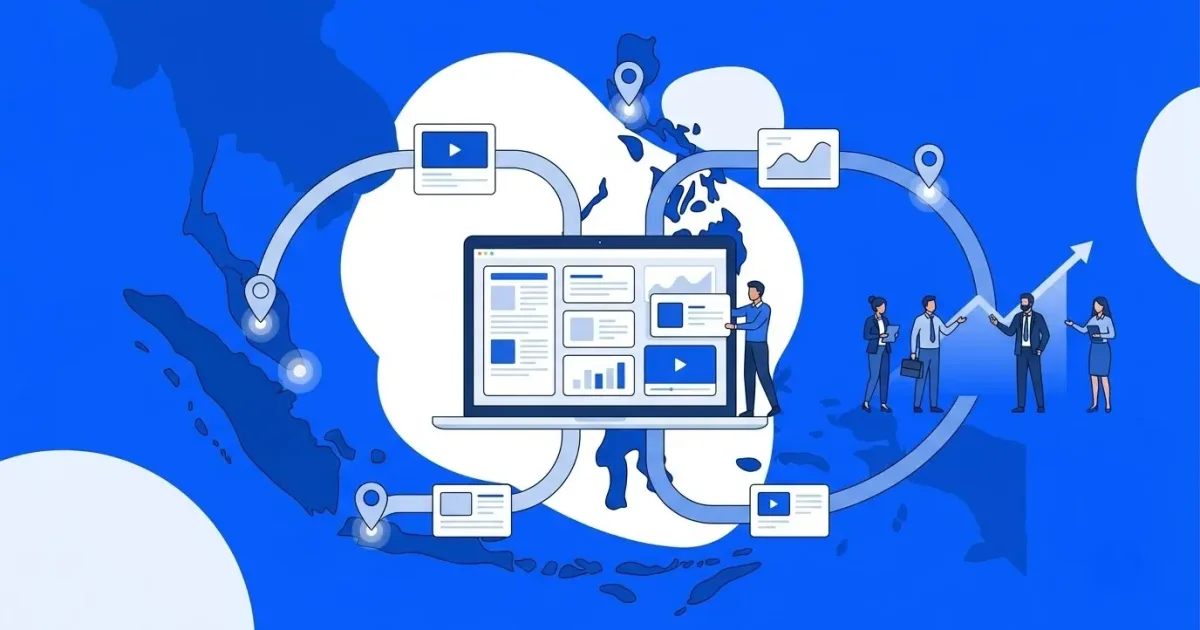
For B2B SaaS brands in Southeast Asia, this matters even more. Buyers in Singapore, Malaysia, the Philippines and Indonesia are early adopters of AI tools, and buying committees increasingly use AI assistants to build shortlists before they ever speak to a vendor.
Here is the uncomfortable part. If an AI engine builds a shortlist for your category and your brand is not in it, you have lost the deal before you knew it existed.
The good news: the brands that get cited are not always the biggest. They are the ones whose content is structured in a way AI engines can understand and trust. That is a level playing field, and it favours teams who move early.
2. GEO vs SEO: What Stays the Same, What Changes
What stays the same
Most of what makes SEO work also makes GEO work:
- Quality content. AI engines favour clear, accurate, well-organised writing. So does Google.
- Authority. Backlinks, brand mentions and expert authorship still signal trust.
- Technical health. If crawlers cannot access and render your pages, neither search engines nor AI engines can use them.
- Search intent. Content that genuinely answers the buyer's question wins in both worlds.
What changes
GEO shifts the emphasis in three important ways:
- From keywords to entities. AI engines think in terms of entities: brands, products, people and concepts, and the relationships between them. Your job is to make your brand a clearly defined entity that is consistently described across the web.
- From rankings to citations. The goal is no longer position one on a results page. It is being quoted, named or linked inside the answer itself.
- From pages to passages. AI engines lift specific passages, not whole pages. A single well-structured paragraph that answers a question directly can earn a citation even if the page does not rank first.
3. How AI Engines Choose Their Sources
Large language models do not pick sources at random. Research and observation point to a consistent set of signals:
- Consensus and consistency. If many independent sources describe your brand the same way, AI engines treat that description as fact. Inconsistent messaging weakens you.
- Structured, extractable content. Clear headings, short paragraphs, lists, tables and FAQ blocks are far easier for AI engines to lift and quote than dense prose.
- Structured data. Schema markup for organisations, articles, FAQs and products helps engines understand what your content is about and who published it.
- Third-party validation. Reviews on sites like G2 and Capterra, press coverage, and mentions in industry round-ups all feed the training and retrieval systems behind AI answers.
- Freshness. Engines that browse the live web, such as Perplexity and ChatGPT with search, favour recently updated pages with visible dates.
- An llms.txt file. A growing convention where you publish a plain-text summary of your site for AI crawlers. It is a low-effort way to make your key pages easy to discover.
4. Seven GEO Tactics You Can Implement This Quarter
Tactic 1: Publish direct answer blocks
At the top of every important page, answer the core question in two or three plain sentences before you go deeper. This is the passage an AI engine is most likely to quote.
Tactic 2: Build honest comparison pages
AI assistants love comparison questions. Pages like "X vs Y" and "best tools for Z" are among the most cited content types. Be genuinely fair about competitors. Balanced pages earn more citations than one-sided sales pitches.
Tactic 3: Create an original statistics page
AI engines need numbers to back up their answers, and they cite the source of those numbers. Publish original data from your own platform, surveys or client work, and keep it updated. One strong statistics page can earn citations for years.
Tactic 4: Add FAQ schema to key pages
Mark up your frequently asked questions with FAQ schema. It gives engines clean question and answer pairs that map directly to the way people prompt AI assistants.
Tactic 5: Strengthen your entity footprint
Make sure your brand is described consistently everywhere: your website, LinkedIn, directories, review sites and partner pages. Same name, same one-line description, same category.
Tactic 6: Invest in digital PR and expert commentary
Mentions in industry publications teach AI engines that your brand belongs in your category conversation. Founder quotes, guest articles and podcast appearances all count.
Tactic 7: Publish an llms.txt file
Add a simple llms.txt file to your site that summarises who you are, what you do and where your key pages live. It takes an afternoon and gives AI crawlers a clean map of your site.
5. How to Measure GEO
GEO measurement is younger than SEO measurement, but you are not flying blind. Track these three things:
- AI referral traffic. Set up a segment in your analytics tool for visits from chatgpt.com, perplexity.ai, gemini.google.com and similar sources. Watch the trend, not the absolute number.
- Citation checks. Once a month, ask the major AI assistants the questions your buyers ask. Record whether your brand appears, what it says about you, and which competitors are named. A simple spreadsheet is enough to start.
- Self-reported attribution. Add "AI assistant such as ChatGPT" as an option in your "How did you hear about us?" form field. Buyers will tell you what your analytics cannot.
Where to Start
You do not need to do all seven tactics at once. Start with the two that compound fastest: direct answer blocks on your most important pages, and one honest comparison page for your category. Then layer in schema, statistics and digital PR over the following quarters.
The brands that show up in AI answers a year from now are the ones doing this groundwork today.
Want to know whether AI engines can actually find and cite your brand right now? Request a free website audit and we will show you exactly where you stand, and what to fix first.